Gesneriads
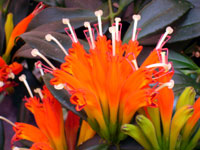
Aeschynanthus are commonly called "lipstick" plants. The blossoms of many of the varieties listed have the appearance of emerging or extending from a tube of lipstick, hence the name "lipstick" plant. Flower colors range from red, orange, and combinations of red, yellow and orange. May be grown in hanging baskets and placed outside in the summer in shaded areas. Indoors, grow in south or west windows for best results. Let soil become slightly dry between waterings. Use a light porous potting mix. Feed plants regularly, using a well balanced fertilizer, at ¼ tsp. per gallon of water, with every watering. Fertilizer may be increased to ½ to 1 full tsp. per gallon of water during spring, and summer, when plants are actively growing, depending upon the size of the plant. (Larger plants can handle more fertilizer.)
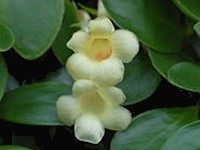
These small leafed, fibrous rooted, trailing plants make wonderful hanging baskets. Easily produce bloom at 12 hours of fluorescent light or in an east window. Enjoys cool temperatures. Let soil become slightly dry between waterings. Use a light porous potting mix. Feed plants regularly, using a well balanced fertilizer, at ¼ tsp. per gallon of water, with every watering.
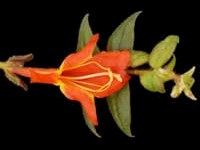
Commonly called "dancing dolphins" or "Shark Plant" because of the interesting bloom shape. Columnea flowers come in striking shades of red, orange, yellow and combinations of these colors, and most varieties will make nice hanging basket plants. South and west windows are best for compact growth. Requirements for artificial lighting is 12 to 14 hours daily. Baskets may be grown outdoors in shaded areas during the summer. Let soil become slightly dry between waterings. Use a light porous potting mix. Feed plants regularly, using a well balanced fertilizer, at ¼ tsp. per gallon of water, with every watering. Fertilizer may be increased to ½ to 1 full tsp. per gallon of water during spring and summer, when plants are actively growing, depending upon the size of the plant. (Larger plants can handle more fertilizer.)
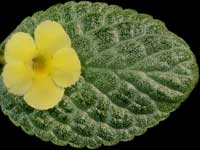
Episcias are commonly called "flame violets," and are primarily grown for their beautiful foliage. Flower colors range from shades of red and red-orange, to pink, lavender, and even yellow. Quick growth and continuous blooms will be easily achieved with 14 hours of fluorescent light daily or by placing plants in a very bright window. The foliage color will vary according to the light intensity. Episcias are warm loving plants, detesting cold air drafts and over watering. Let soil become slightly dry between waterings. Use a light porous potting mix. Feed plants regularly, using a well balanced fertilizer, at ¼ tsp. per gallon of water, with every watering. Fertilizer may be increased to ½ tsp. per gallon of water during spring and summer, when plants are actively growing.
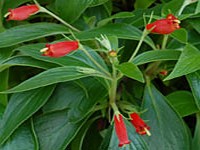
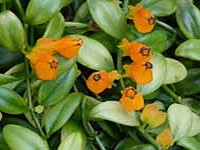
Nematanthus are commonly called "Goldfish" plants, having flowers that are pouch shaped. Blossoms come in shades of red-orange and yellow-orange. The varieties we offer are trailing plants and may be grown in hanging baskets. Grow in a south-west window, or under fluorescent lights, 14 hours daily for best growth and bloom. Let soil become slightly dry between waterings. Use a light porous potting mix. Feed plants regularly, using a well balanced fertilizer, at ¼ tsp. per gallon of water, with every watering. Fertilizer may be increased to ½ to 1 full tsp. per gallon of water during spring and summer, when plants are actively growing, depending upon the size of the plant. (Larger plants can handle more fertilizer.)
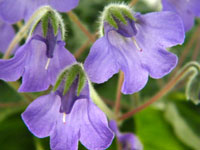
Originating in Indo-China, these compact gesneriads, affectionately referred to as "pets", have blooms reminiscent of wild violets and symmetrical growing habits. We find that they grow very well with low to medium light levels, cooler temperatures, and a minimum of water and fertilizer. Requirements for artificial lighting would be around 8 to 10 hours. They will do well on the bottom shelf of "light stands" and near the end of the fluorescent light tubes. Use a light, porous potting mix, and grow them in small pots! Let the soil become fairly dry between waterings. They also do very well when "wick watered." Feed plants regularly, using a well balanced fertilizer, at ¼ tsp. per gallon of water, with every watering.
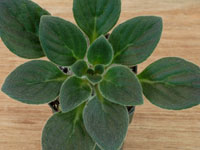
Primulinas are some of the most popular gesneriad plants that have come about in recent years! They are native to the Asian area, growing in the higher elevations. They are grown for their beautiful foliage, showy flowers, and ease of care! We find that they grow very well with lower light levels, cooler temperatures, and a minimum of water and fertilizer. Requirements for artificial lighting would be around 8 to 10 hours. They will do well on the bottom shelf of "light stands" and near the end of the fluorescent light tubes. Use a light, porous potting mix, and grow them in small pots! Let the soil become fairly dry between watering. Feed plants regularly, using a well balanced fertilizer, at ¼ tsp. per gallon of water, with every watering.
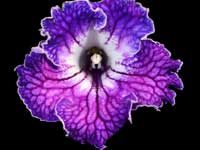
Streptocarpus are often called "Cape Primrose". These fibrous rooted plants have trumpet shaped flowers in a wide array of colors and sizes. Leaf size and length varies from plant to plant and may be trimmed with scissors to a shorter length if desired. Plants can withstand cooler temperatures, but extremely high temperatures can cause death. Streptocarpus require around 15 hours of fluorescent light a day for strong growth and flowering. Or, grow in natural light using a southern exposure. Keep plants evenly moist, being careful not to over water. Streps adapt quite nicely to growing in self-watering pots. Feed plants regularly, using a well-balanced fertilizer, at ¼ tsp. per gallon of water, with every watering. Fertilizer may be increased to ½ tsp. per gallon of water during spring and summer, when plants are actively growing. Use a light, porous potting medium. When repotting, keep in mind streps tend to produce many roots at the top of the soil. Do not "bury" your plants below the soil line!
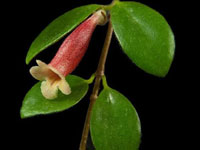
A production of magnificent blooms can be achieved under moderate light. These plants enjoy slightly cooler temperatures, have good trailing foliage, and do very well in hanging baskets. These gesneriads are a cross between Codonanthe and Nematanthus and are very similar to Codonanthe in cultural requirements. We find them to be very free blooming in natural light or artificial lighting.